A residential dumpster rental is a container you load yourself over several days, it is not a junk-removal crew that loads for you. That distinction matters most on a kitchen gut in Wallingford or a basement cleanout…
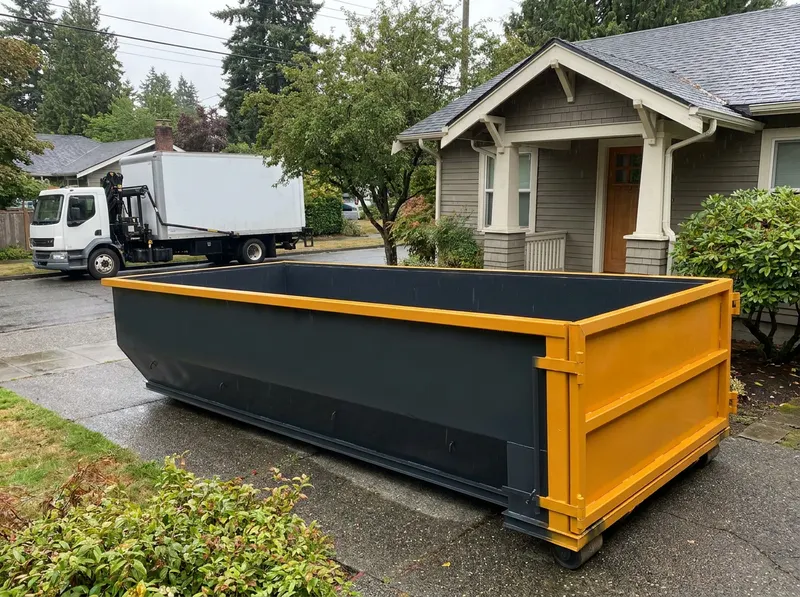
A residential dumpster rental is a container you load yourself over several days, it is not a junk-removal crew that loads for you. That distinction matters most on a kitchen gut in Wallingford or a basement cleanout in Beacon Hill, where debris piles up faster than weekly curbside collection can handle. The flat price covers delivery, a standard rental window, haul-away, and dump fees, so the number quoted on the phone is the number paid. Household debris in King County is routed to transfer stations and landfills under state solid-waste rules tracked by the Washington Department of Ecology, and certain items are banned from roll-offs regardless of size.
Sizing follows the job, not the house. The 10-yard holds roughly 4 pickup-truck loads and fits a single-bathroom remodel or a small garage purge; the 15-yard suits a one-room flooring tear-out; the 20-yard covers a full kitchen remodel or a large deck demo; the 30-yard handles a whole-home cleanout; and the 40-yard carries a major renovation or estate clear-out. If it's a single-room cleanout, the 10 or 15-yard is enough. If it's a roof tear-off or a full move-out in Greenwood, step up to the 30 or 40-yard, the trade-off is driveway space versus how many trips you avoid. Low-density debris like insulation, cardboard, and furniture fills yardage fast, so bulky loads lean one size larger than their weight suggests.
Placement decides whether you need a permit. A container set entirely on your own driveway or private lot needs no permit anywhere in Seattle. A dumpster placed in the street or public right-of-way requires a permit through the Seattle Department of Transportation, which matters on the tight rowhouse blocks of Capitol Hill and the narrow streets near the Lake Washington Ship Canal. Roll-off containers sit on wheels and a steel frame; plywood under the wheels protects soft asphalt on older West Seattle driveways. For loading, keep debris level with the top rail, overfilled containers that sit above the sidewall cannot be legally hauled on the road, a limit tied to FMCSA load regulations.
Step 1: call (425) 270-4066 with the Seattle address and a short description of the job. Step 2: a container size is matched to the debris, and a drop date is set. Step 3: the roll-off is delivered to the driveway or a permitted street spot. Step 4: you load it over the rental period. Step 5: it is hauled to the transfer station and the load is disposed. Yard debris from a Queen Anne hedge removal or Fremont landscaping job is accepted, but soil, concrete, and brick are heavy enough to need a dedicated heavy-material container, ask on the call so the right one arrives. Banned items include paint, solvents, automotive fluids, tires, and refrigerant appliances; the EPA household hazardous waste program and King County hazardous waste drop-off sites take those instead. Reusable goods pulled from a Columbia City cleanout can be diverted through Earth911 recycling listings before the rest goes in the bin.
Every job gets a firm, written price after an on-site visit.
Tell us about your residential dumpster rental job in Seattle and we'll send a clear, written quote, usually the same day.
 Payload Dumpster Rental