The 10-yard dumpster is sized for a single-room project, a bathroom gut, a small kitchen tear-out, a garage cleanout in Wallingford, or a one-weekend yard-waste haul near Green Lake. It holds about 4 pickup-truck…
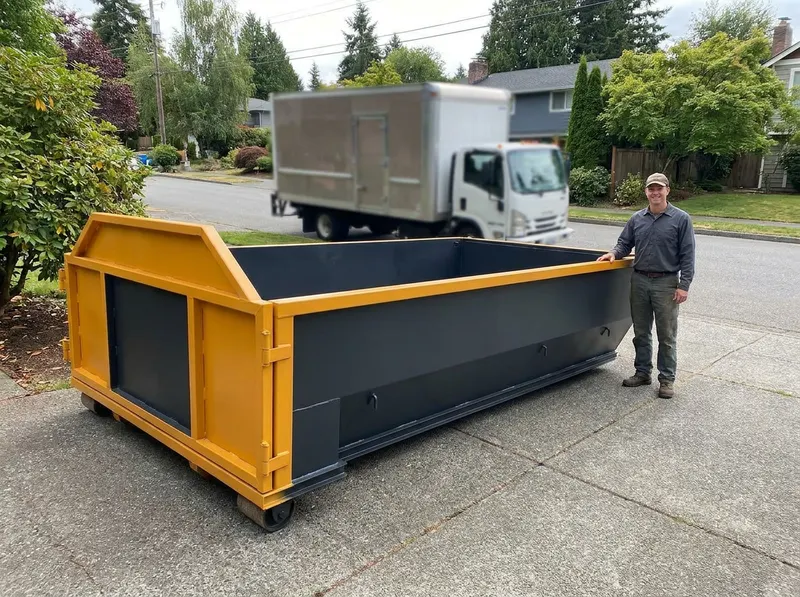
The 10-yard dumpster is sized for a single-room project, a bathroom gut, a small kitchen tear-out, a garage cleanout in Wallingford, or a one-weekend yard-waste haul near Green Lake. It holds about 4 pickup-truck loads, which matches the debris from one bathroom remodel (old tile, vanity, tub, and subfloor) or roughly 2,000-3,000 pounds of general junk. Payload Dumpster Rental runs flat, all-in pricing, so the $595 is the price whether the box leaves full or half-full, the figure is not a teaser that grows with a per-ton charge at the scale. That matters because most dumpster disputes come from construction and demolition debris weighing more than the renter expected, which triggers overage fees on metered contracts; a flat rate removes that guesswork.
Sizing is the real decision. Step 1, estimate the debris: a single room or one-truck cleanout points to the 10-yard; a full-kitchen remodel or several rooms points to the 15-yard ($650) or 20-yard ($695). Step 2, check weight, not just volume, dense material like dirt, concrete, roofing shingles, or plaster fills a small box fast and gets heavy, so a roof tear-off or a Beacon Hill foundation dig usually suits a 30-yard ($795) or 40-yard ($895) despite looking like it would fit in less. Step 3, measure the drop spot: the 10-yard's ~12-foot footprint fits most West Seattle and Queen Anne driveways, while a larger box may force a street placement. The trade-off is simple, a 10-yard keeps a driveway usable and costs the least, but a job that overflows it means a second haul, so sizing up one step is often cheaper than two trips.
Placement in Seattle follows a few rules. A dumpster set entirely on private property, a driveway or alley pad in Fremont, Greenwood, or Columbia City, needs no permit. A box placed in the public right-of-way (the street or planting strip) requires a Street Use permit from the Seattle Department of Transportation, and streets in dense neighborhoods like Capitol Hill and the Rainier Valley sometimes have parking or load restrictions worth checking first. Drivers need about 40-50 feet of clear, level approach and roughly 10-12 feet of overhead clearance to swing the container off the roll-off truck, so low branches and tight turnarounds should be cleared before the drop.
A dumpster rental is not junk removal, the renter loads the container; Payload Dumpster Rental delivers the empty box and hauls it away. Prohibited items follow King County and state rules: no household hazardous waste, no automotive fluids or batteries, no tires, no wet paint (dried latex in an open can is generally fine), and no appliances with refrigerant such as fridges or AC units unless the refrigerant is professionally recovered first. Yard debris, concrete, and clean wood are often routed to recycling rather than landfill, King County Solid Waste and Earth911 both list local drop points for items the box cannot take. For jobsite loads, keeping debris below the fill line and off the walking path aligns with OSHA disposal-of-waste rules.
Every job gets a firm, written price after an on-site visit.
Tell us about your 10-yard dumpster job in Seattle and we'll send a clear, written quote, usually the same day.
 Payload Dumpster Rental